

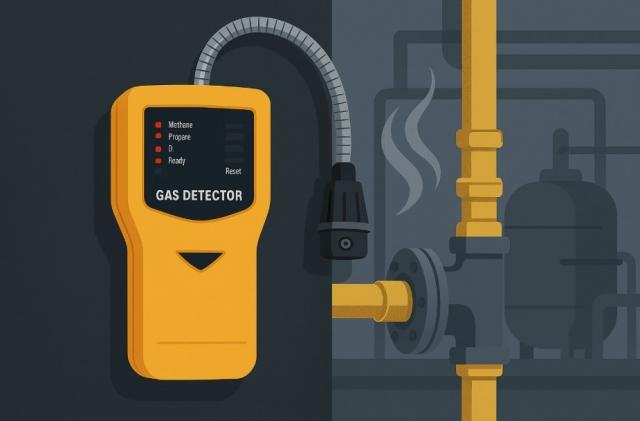
Let's talk about something you rarely think about but rely on every day—the faint smell that warns you of danger in the air. Natural gas itself is odorless, invisible, and deadly silent. That's why odorants, those pungent sulfur-based compounds, play a critical role in safety monitoring. They are the silent heroes of the gas industry, ensuring that even the smallest leak never goes unnoticed. In every modern pipeline system, monitoring these odorant levels is not just science—it's protection. It's the balance between technology, chemistry, and human perception.
The Science Behind the Smell
That familiar rotten-egg odor comes from a compound called mercaptan, and it's not there by accident. Utilities add this chemical precisely to make gas leaks detectable by scent. But it's not about just adding it once—it's about maintaining the right concentration. Too little, and humans won't detect it. Too much, and it becomes overwhelming, masking the real issue. This balance must be continually monitored through advanced sensors and routine field checks. It's a chemical fingerprint that signals both danger and safety.
When Chemistry Meets Human Senses
Here's where biology and chemistry shake hands. The human nose can detect mercaptan at extremely low concentrations, making it an excellent early-warning system. But conditions like humidity, temperature, and even individual sensitivity can alter detection reliability. That's why odorant monitoring isn't left to human senses alone—it's backed by precision instruments. Technicians regularly test these odorant levels to ensure they meet federal safety standards. It's this intersection of human instinct and engineering that forms the first line of defense.
Technology in Modern Leak Detection
Today's gas systems rely on complex monitoring tools that analyze odorant consistency and dispersion. These devices can detect minute variations before a human ever notices the smell. Data collected from these sensors can trigger automatic alerts, pinpointing the source quickly. Advanced mapping systems integrate this information to identify affected zones. It's this digital vigilance that prevents small leaks from turning into catastrophes. In communities where safety is paramount, such as gas leaks located in Port Jefferson Station, NY, this monitoring ensures lives and infrastructure remain secure.
Maintaining Odorant Stability Over Time
Odorants can fade during transmission due to chemical reactions or absorption in pipeline materials. That's why regular testing and recalibration of injection systems are vital. Engineers adjust concentrations to counteract losses and maintain a consistent detection threshold. Without this process, gas could travel undetected for miles before reaching consumers. The idea is simple—stability equals safety. This continuous oversight keeps the warning system alive and trustworthy.
Public Awareness and Safety Culture
Even with cutting-edge monitoring, public awareness remains the final layer of defense. People must recognize the smell and know how to respond. Utilities run educational campaigns reminding communities to report any unusual odor immediately. Every citizen becomes part of a vast safety network, acting as living sensors. The synergy between trained professionals and informed residents strengthens the chain of prevention. It's an unspoken partnership built on vigilance and trust.
Conclusion
Monitoring odorant levels isn't just regulatory compliance—it's humanity's guardrail against unseen danger. It's the chemistry of caution, engineered precision, and sensory awareness working in harmony. In the silent world of gas movement beneath our feet, that faint sulfuric trace tells a powerful story. A story of safety, science, and responsibility woven into every breath we take.